What you will be able to do after this lesson
You will be able to identify where modularity delivers real value, and avoid carrying the requirements of one function over to another.
Why it matters
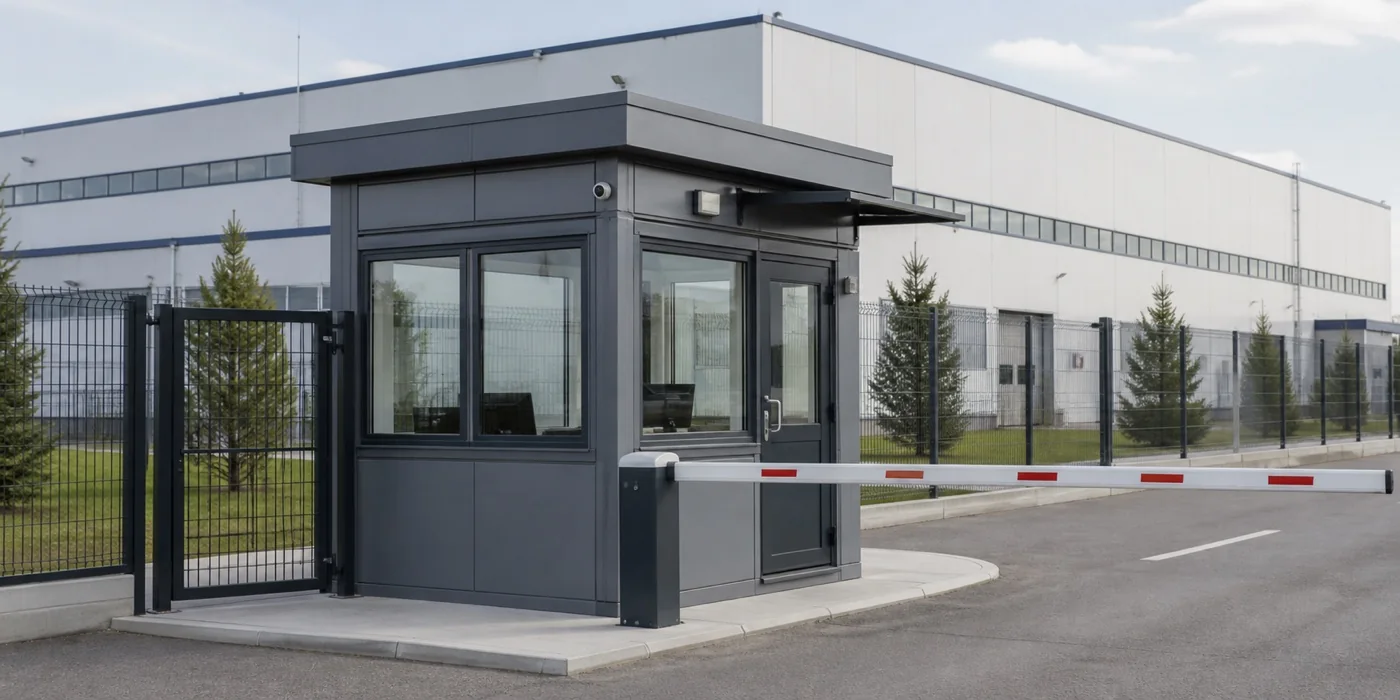
Modular solutions are used where factory readiness, phasing, mobility and repeatability matter: shift worker camps, site headquarters, dormitories, canteens, sanitary blocks, security checkpoints, medical stations, administrative buildings, and technological modules for equipment.
Each function gets its own room program and its own engineering requirements. Using the same module specification for an office, a dormitory and a generator room is a typical mistake that leads either to overpaying or to non-compliance with the regulations.
A modular solution should be compared with alternatives over the full life cycle: service life, relocation, maintenance and residual value. For short-term and relocatable tasks modules win; for permanent facilities the comparison is made per project.
How to apply this on a project
- Step 1. Prepare a separate room program for each function.
- Step 2. Do not carry the requirements of a technological module over to a residential one, or vice versa.
- Step 3. Choose modular construction where factory readiness, phasing, mobility or repeatability matter.
- Step 4. Compare with alternative technologies over the full life cycle.
Typical mistake
Using the same module specification for an office, a dormitory and equipment.
Check before the next step
- Function
- Service life
- Mobility
- Building services
- Logistics
- Maintenance
Related materials and tools
Apply the lesson to your project
Gather the input data and record the unknown parameters as questions for approval. We prepare a calculation based on the questionnaire within 1 working day.