What you will be able to do after this lesson
You will learn to formulate the purpose so that the list of rooms, the operating mode and the engineering requirements follow from it.
Why it matters
The phrase “we need a 6×2,4 container” contains no task. The same 6 055 × 2 435 mm shell can become a site manager's office, a two-person room, a sanitary block with showers or an enclosure for a diesel generator. Each option has its own requirements for the floor, ventilation, electrical system, doors and documentation.
The correct order: first the function and the list of rooms, then the operating mode (round-the-clock, shift, seasonal), then the number of users. Only after that does it make sense to talk about dimensions and series. For equipment rooms, the equipment is listed separately with its mass, power and heat output: the frame, ventilation and fire protection are sized around it.
INTERMODULE treats purpose and series as two independent characteristics: an office module can be in the Budget, Standard or Project series. Purpose defines the layout and fit-out; the series defines the structure and configuration.
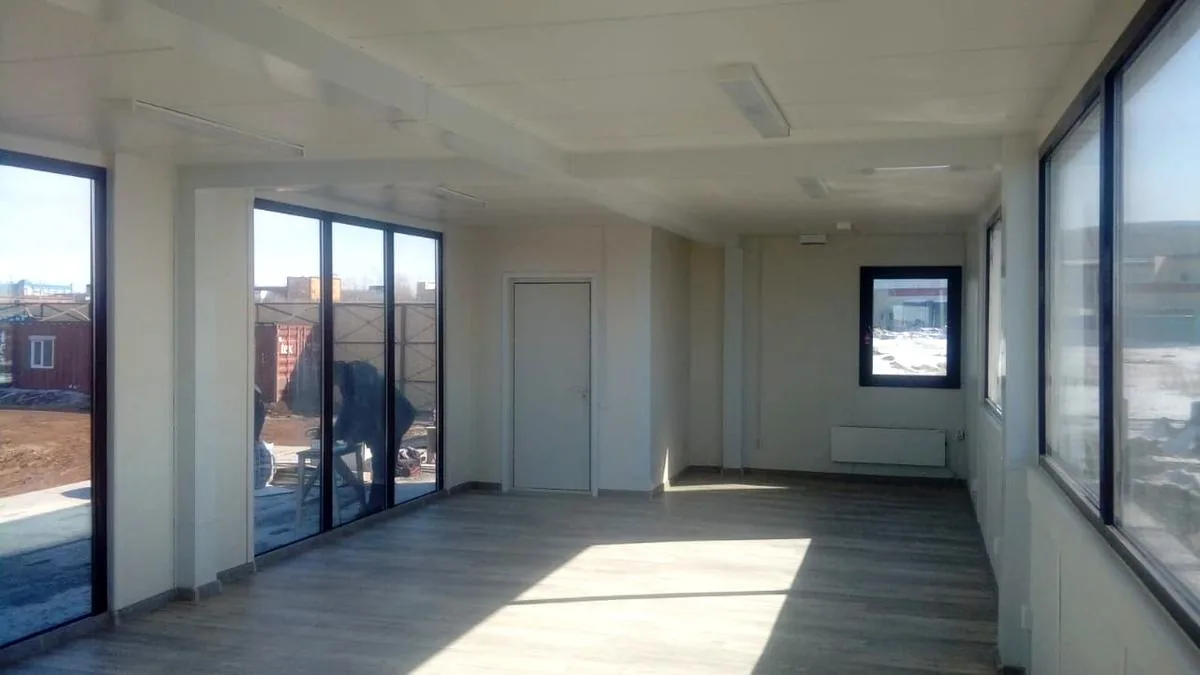
How to apply this on a project
- Step 1. Describe the building's primary function and the list of rooms.
- Step 2. State the operating mode: round-the-clock, shift, seasonal or permanent.
- Step 3. For equipment rooms, list the equipment, masses, power ratings, heat output and maintenance requirements.
- Step 4. For accommodation and welfare facilities, fix the number of users and their occupancy pattern.
Typical mistake
Starting the spec with “we need a 6×2,4 container” without explaining what it is for.
Check before the next step
- Purpose stated in one sentence
- List of rooms provided
- Operating mode specified
- Number of users determined
- Special equipment listed in an attachment
Related materials and tools
Apply the lesson to your project
Gather the input data and record the unknown parameters as questions for approval. We prepare a calculation based on the questionnaire within 1 working day.