What you will be able to do after this lesson
You will understand the frame's structural scheme and the role of fittings and steel protection.
Why it matters
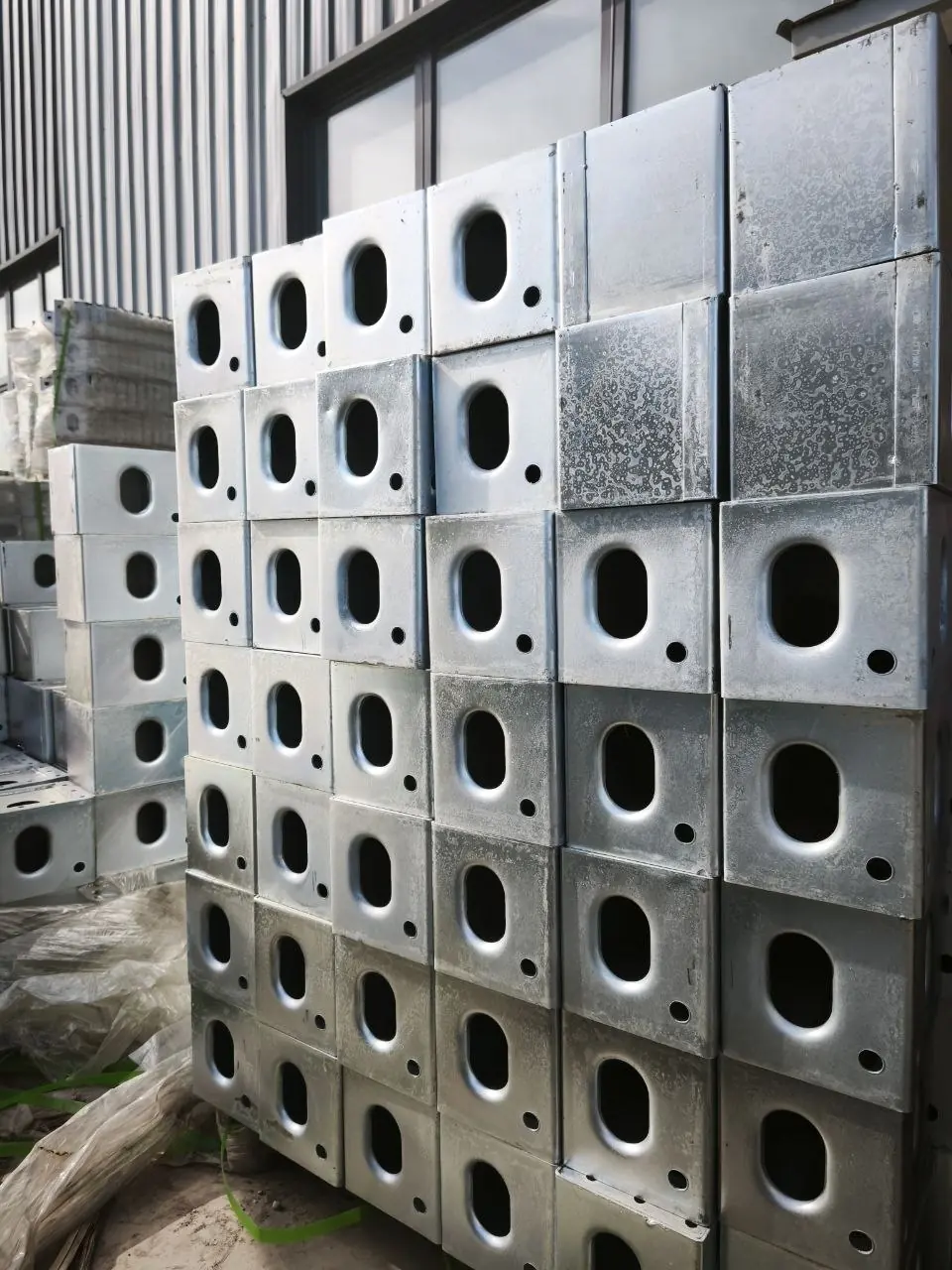
Loads from the roof and floor are transferred through beams to the corner posts and supports. The corner fittings are the most heavily loaded part: the module is lifted by crane, joined to its neighbors and stacked through them. That is why in the INTERMODULE Standard series the fittings and connection details are hot-dip galvanized, while the beams, posts and battens are cold-formed from galvanized profile.
Steel thickness matters, but on its own it does not describe the frame: what matters is the structural scheme, the connection details, geometric tolerances and corrosion protection. Galvanized profile does not rust where the paint has been chipped during transport, which is a distinct advantage for mobile facilities.
To join modules from different batches, the geometric tolerances must be identical, and that is ensured by assembling the frames on a jig. The same condition underlies the Open Compatibility Standard.
How to apply this on a project
- Step 1. Consider the load path from the roof and floor to the posts and supports.
- Step 2. Lifting and transport details must be part of the structural scheme.
- Step 3. Geometric tolerances matter for joining modules.
- Step 4. Corrosion protection is selected according to the operating conditions and the production technology.
Typical mistake
Increasing the thickness of individual profiles without understanding the structural scheme and connection details.
Check before the next step
- Structural scheme
- Support points
- Lifting
- Transport
- Tolerances
- Corrosion protection
Related materials and tools
Apply the lesson to your project
Gather the input data and record the unknown parameters as questions for approval. We prepare a calculation based on the questionnaire within 1 working day.