What you will be able to do after this lesson
You will be able to separate calculated external parameters from required internal ones and state the source of every figure.
Why it matters
“A container for −45 °C” is a characteristic of the structure, not of the specification. The project needs the design outdoor air temperature for the site's region, the required indoor temperature for each type of room and the operating mode: year-round or seasonal. From these figures the design engineer derives the insulation thickness, heating capacity and ventilation.
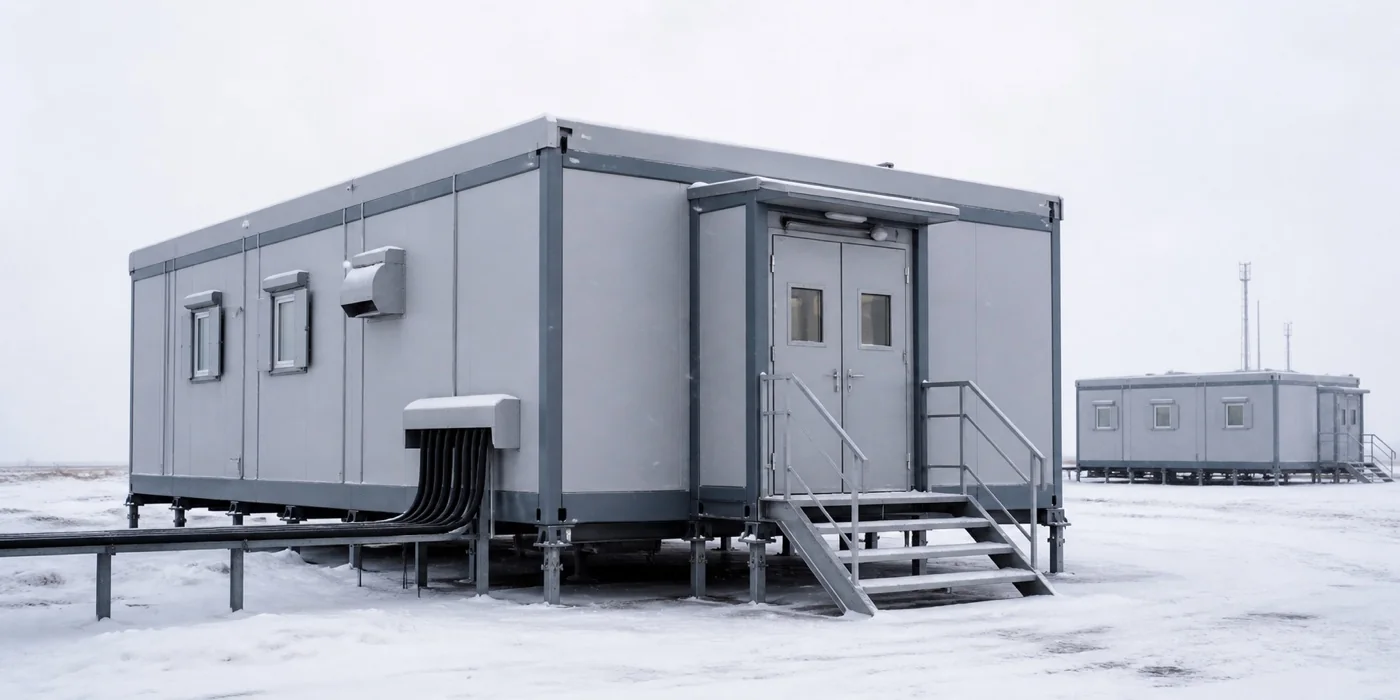
INTERMODULE structures are designed for a range from −45 to +45 °C. But this does not eliminate the thermal calculation: the same module in Shymkent and in northern Kazakhstan will get different insulation and heating, and in a dry hot climate air conditioning and protection from overheating matter more.
If the data is not available, the spec says “to be determined by design” with the site indicated. This is better than a “universal” temperature that will later have to be recalculated.
| Data | Source | Confirmed by |
|---|---|---|
| Design outdoor air temperature | climate norms of Kazakhstan for the site's region | design engineer |
| Required indoor temperature | room purpose and operating mode | client, then design engineer |
| Snow and wind zone | load norms for the site | design engineer |
| Design range of the INTERMODULE structure | product passport: −45…+45 °C | manufacturer |
How to apply this on a project
- Step 1. State the site location and the design climate parameters from an accepted source.
- Step 2. Distinguish between the design outdoor temperature and the required indoor temperature.
- Step 3. For engineering systems, specify humidity, wind, snow, seasonality and operating mode.
- Step 4. If the data is not available, write “to be determined by design” instead of guessing.
Typical mistake
Choosing the insulation thickness by the name of the city alone, without a thermal calculation.
Check before the next step
- Site defined
- Source of climate data specified
- Indoor temperatures set
- Special conditions listed
Related materials and tools
Apply the lesson to your project
Gather the input data and record the unknown parameters as questions for approval. We prepare a calculation based on the questionnaire within 1 working day.